
 For Indiana Gov. Mike Pence, signing his state’s anti-LGBT “Religious Freedom Restoration Act” might have been all about the base. But for businesses worried about the bottom line, it’s all about the money, money, money.
After Pence’s disastrous news conference Tuesday, Indiana Republican lawmakers are furiously working on a “fix” to the law before the NCAA March Madness this weekend in Indianapolis for the Men’s Final Four games.
A draft of new language presented to Pence Wednesday morning specifies that the RFRA law “cannot be used as a legal defense to discriminate against residents based on their sexual orientation,” reports The Indianapolis Star. It says no provider—including businesses or individuals—is authorized to refuse services, “facilities, goods, or public accommodation to any member of the public based on sexual orientation or gender identity, in addition to race, color, religion, ancestry, age, national origin, disability, sex, or military service.” It does not, however, specifically establish sexual orientation as a protected class under state law. And it exempts churches and nonprofit religious organizations (including religiously -affiliated schools) from the definition of “provider.”
Freedom Indiana, the statewide grassroots group opposing Indiana’s RFRA law, issued the following statement from campaign manager Katie Blair:
“We understand that lawmakers are working to ‘fix’ the Indiana RFRA that has done so much harm to Indiana over the past week, but we want to make it clear that we need full protection from discrimination against all LGBT Hoosiers across the state and a guarantee that this RFRA cannot be used to undermine any nondiscrimination protections.
According to current media reports, the proposal being considered falls far short of these principles, leaving the door wide open for discrimination.”
Lawmakers conferred with businesses when drafting the language, but that may not have included the small pizza business owned by the O’Connor family, which defines their Memories Pizza as “Christian establishment.”
The O’Connors says they won’t discriminate against any individual who orders a slice. “We’re not discriminating against anyone, that’s just our belief and anyone has the right to believe in anything,” Crystal O’Connor told the local ABC station, “We definitely agree with the bill.”
She added: “I do not think it’s targeting gays. I don’t think it’s discrimination… It’s supposed to help people that have a religious belief.”
“I choose to be heterosexual. They choose to be homosexual. Why should I be beat over the head to go along with something they choose? Why should I be beat over the head to go along with something they choose?” said Crystal’s father Kevin O’Connor.
Earlier this week, an Indiana business owner anonymously said he always discriminates against gay people. “I feel okay with it because it’s my place of business, I pay the rent, I’ve built it with all my money and my doing. It’s my place; I can do whatever I want with it,” the blog reported.
On the other hand, Arne Sorenson, president and CEO of Marriott, said:
“The legislation in Indiana—and there are some bills being considered in other states—is not just pure idiocy from a business perspective—and it is that—the notion that you can tell businesses somehow that they are free to discriminate against people based on who they are is madness.”
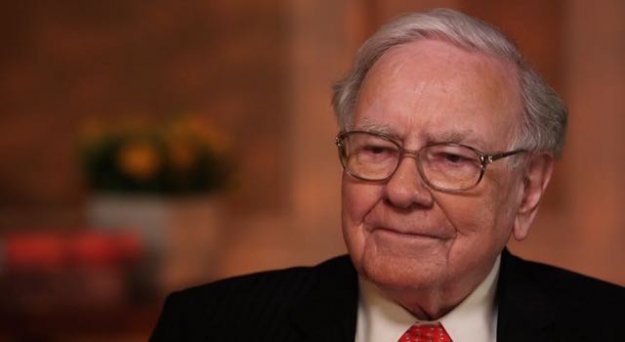
He was not the only big business leader to oppose the RFRA in Indiana and elsewhere. Billionaire investor Warren Buffett (pictured above), chair of Berkshire Hathaway, which includes 70-plus companies (including GEICO, Heinz, See’s Candies, Fruit of the Loom)—many of which do business or are headquartered in Indiana. Buffett told CNN Money that he has not read the law but is aware of it through TV news reports. He says:
“To the extent that it could in any way be prejudicial to gays or lesbians, I’d be opposed to that. I’ve heard people say it isn’t designed to do that or something. But in the end, that would be the test for me.”
Told that Pence is moving toward making sure that the new RFRA doesn’t discriminate against anyone—but adding protections for gays and lesbians is not something he is working toward, Buffett says:
“That sounds suspicious. I think if people can exercise discrimination based on sexual orientation, then it’s wrong. I don’t know how the law reads exactly so I don’t know what words you would change. But when you get all through and the dust settles, if you can read the law and you can discriminate against people based on sexual orientation, I would say that someday better do something about it.”
Asked if he thinks gays should be added to state law as a protected class, Buffett says:
“I think generally, yeah. I think the answer is they are entitled to equal rights, and equal acceptance and 100%, in the eyes of the law.“
However, Buffett doubts that any of the companies would move out. He says the companies are run by their managers and he doesn’t interfere, “in terms of political decisions.” But “they know how I feel.”
The Center for American Progress estimates that the Indiana law could potentially cost the state $256.4 million, and counting:
Lost:
- Angie’s List: $40 million
- American Federation of State, County and Municipal Employees, or AFSCME, conference: $500,000
At risk:
- Big Ten football, 2016–2021: $96 million ($16 million per year)
- Big Ten men’s basketball, 2020: $8 million
- Big Ten women’s basketball, 2017–2021: $10 million ($2 million per year)
- NCAA Men’s Final Four, 2021: $71 million
- NCAA Women’s Final Four, 2016: $25 million
- Christian Church (Disciples of Christ) 2017 General Assembly: $5.9 million
Additionally, CNN Money breaks down a letter and statements from 39 tech executives Wednesday condemning the Indiana and Arkansas laws:
“As we seek to attract and retain great talent from Indiana and around the world, it is critical that we make it clear that Indiana is the welcoming state we all believe it to be,” they wrote. The letters was signed by top execs at Angie’s List, Anthem, Cummins, Dow AgroSciences, Eli Lilly, Emmis Communications, Indiana University Health, Roche Diagnostics and Salesforce Marketing Cloud.
Starbucks: (SBUX) “We join with others opposing any state or federal legislation that permits discrimination based on sexual orientation or gender identity and encourage policymakers everywhere to embrace equality,” Starbucks said in a statement.
Apple (AAPL, Tech30) CEO Tim Cook: In an op-ed published Sunday, Cook said such laws are “very dangerous” and contrary to America’s founding principles.
“On behalf of Apple, I’m standing up to oppose this new wave of legislation,” wrote Cook, who came out as gay last year.
Angie’s List (ANGI) CEO Bill Oesterle: The proposed campus expansion project in Indianapolis is “on hold” following the bill’s passage.
Related: Brands that love LGBT the most
PayPal co-founder Max Levchin: Opposing the law is “a basic human decency issue,” Levchin told CNN.
“I’m asking my fellow CEOs to look at how they’re thinking about their relationship with the state and evaluate it in terms of the legislation that’s getting signed into law,” he said.
Yelp (YELP) CEO Jeremy Stoppelman: Yelp will “make every effort” to expand its corporate operations in states that do not have such laws on the books. “These laws set a terrible precedent that will likely harm the broader economic health of the states where they have been adopted.”
Salesforce (CRM, Tech30) CEO Marc Benioff: The law is an “outrage,” he said, and that his company will “dramatically reduce” its investments in Indiana.
Eli Lilly (LLY): “We certainly understand the implications this legislation has on our ability to attract and retain employees. Simply put, we believe discriminatory legislation is bad for Indiana and for business.”
Eli Lilly employs more than 11,700 workers in Indiana, mostly in Indianapolis.
NBA, WNBA, Indiana Pacers and Indiana Fever: “The game of basketball is grounded in long established principles of inclusion and mutual respect. We will continue to ensure that all fans, players and employees feel welcome at all NBA and WNBA events in Indiana and elsewhere.”
NCAA: “We are especially concerned about how this legislation could affect our student-athletes and employees.”
Gen Con: The people that run the video game convention said the law would “factor into our decision making on hosting the convention in the state of Indiana in future years.”
Gen Con brought 56,000 people to the state last year, according to CEO Adrian Swartout.