
By Karen Ocamb
May 5, 2015 :: 9:43 AM
Gay civil rights leader David Mixner may be a philosophical citizen of the world but much of his legend and legacy grew out of his historic work in Los Angeles on behalf of LGBT equality and people with HIV/AIDS. Now Mixner resides in New York City where he has segued into writing for the theatre and film. His latest endeavor is an autobiographical one-man show Oh, Hell No! which he is taking on a 10-city national tour to benefit the Point Foundation. He stops in LA on Thursday, June 11 for a show at the El Rey Theatre where he will share stories from his more than 40 years of LGBT activism.
Mixner says the show is part Garrison Keillor, part Will Rogers, part Johnny Appleseed—with music from Dave Koz and others. The acclaimed, sold out New York premiere raised nearly $200,000 in one night in a small theatre and received great reviews. The sizable donations from the play will enable the Point Foundation to support promising LGBT students to overcome their personal obstacles and achieve their academic and leadership potential.
“One of the reasons I decided to do the play was that a year and a half ago I was in critical condition. I’ve had a bad spell of health issues—11 surgeries and 7 stays in intensive care. But the last one a year ago February was particularly tough and they didn’t think I was going to make it. And when I did pull through— and have been well ever since—I realized that there were many stories that I had not passed on to the next generation,” Mixner told me by phone for an upcoming interview in Frontiers Magazine.
Mixner underscored that these recollections of his journey are 40 years old, told to the best of his ability in an artistic format. He notes that there are different interpretations and memories of the same event, including by some people who believe they were there but weren’t.
“History is a series of flawed recollections,” Mixner says. “I don’t pretend my recollections are perfect.” But he adds, “I feel like I have left a legacy of attempting to create change.”
Mixner urges all people who have stories to tell to get them down. “We are in danger of losing a lot of this,” depriving the next generation of stories about the courage, dignity and heroism of telling truth to power and taking care of gays brothers and others when the government turned its back on people with AIDS.
“I gave 90 eulogies in the 1980s,” Mixner says. “You don’t really think about it when you’re going through it.” But now, with the process of diving deeply into his emotional center in creating the play, Mixner says he has Post Traumatic Stress Disorder (PTSD), for which he is receiving support with veterans and by having a sense of humor. (Mixner is pictured above with Ambassador Jim Hormel and the late Dr. Joel Weisman, at an amFAR event honoring Mixner, Elizabeth Taylor and others.)
Oh, Hell No! focuses on the essence of three critical historical events when Mixner was in Los Angeles. The first looks at his coming out and joining MECLA (Municipal Elections Committee of Los Angeles), the nation’s first gay political action committee. It was 1976 and Mixner was a well-known but closeted political consultant managing the re-election campaign of LA Mayor Tom Bradley. Coming out was difficult but he found support in MECLA—especially as California’s gays took on the extraordinary fight with the Religious Right over the Briggs Initiative, a statewide ballot measure that would fire gay and lesbian public school teachers and anyone who supported them. Mixner became the statewide chair of No on Prop 6, which included convincing Gov. Ronald Reagan to oppose the anti-gay measure. Mixner notes that the success in defeating the Briggs Initiative forestalled more anti-gay initiatives until the mid-1980s.
The second section of Oh Hell No! describes the horror of the AIDS crisis and the heroism of so many in trying to fight the government to save their brothers and stop the ever-growing tidal wave of death. And for the first time, Mixner reveals that he and a small network helped gay men fulfill their final request and die with dignity during the AIDS holocaust before HIV became a manageable disease. Assisted suicide is still illegal in California so the revelation is risky—but powerful. “This generation must know this story,” Mixner says, an incredible history that “should fill them with pride” at the courage and sacrifice gay people made for one another.
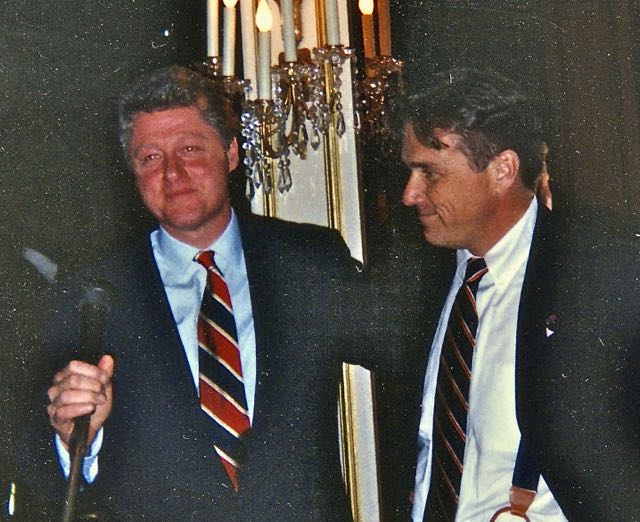
The third section focuses on Mixner’s recounting of his relationship with old friend Bill Clinton, whom Mixner knew from the anti-Vietnam War days. Mixner and ANGLE, the successor to MECLA, were early supporters and helped elect President Clinton based on numerous promises. But once in office, Clinton betrayed the LGBT community and Mixner personally—which prompted him and others (including MECLA/ANGLE’s Diane Abbitt and Roberta Bennett and West Hollywood City Councilmember John Duran) to protest and get arrested after Clinton signed the “Don’t Ask, Don’t Tell” military policy.
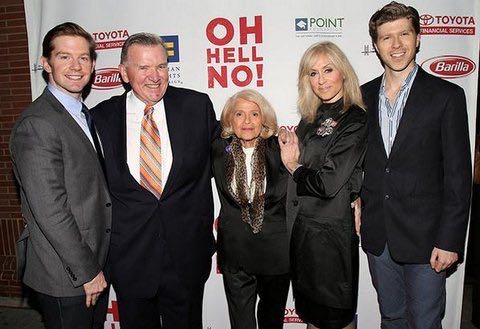
Mixner says there is much that isn’t covered in the play in order to keep it at 90 minutes. But the New York reviews indicate it is a riveting and often funny recounting of LGBT history that will hopefully be recorded and distributed to a larger audience. (Mixner is pictured above with actor Rory O’Malley, DOMA heroine Edie Windsor, longtime LGBT/AIDS activist and ally actor Judith Light and actor Will Reynolds.)
(The full, revealing interview with David Mixner will be featured in the Pride issue of Frontiers Magazine. The online version will also include numerous photos of that historical period in LA.)