
Back in the day, it was nearly impossible to imagine the President of the United States issuing a proclamation declaring June as LGBT Pride Month. And yet now the impossible is standard, even required. Pre-party, festival and parade, Barack Obama said last May: “All people deserve to live with dignity and respect, free from fear and violence, and protected against discrimination, regardless of their gender identity or sexual orientation.”
Interestingly, however, in this era of Instagram and Snap-chat—the real fruit of the ‘60s’ “Be Here Now” movement designed for awareness in the precious moment—“back in the day” is simply yesterday. And yet it is also true that such consciousness is without meaning if not placed in the context of continuity. For instance, an actor—who must live in each moment on stage—mentally prepares by asking himself “what is going on the moment before my entrance in this scene?” Likewise, history is not a series of staccato moments disjointedly strung together with no repercussion or reverberation.
But grasping that interconnectivity and that the LGBT “community” is more of a minority than an absurd string of individuals with the heretofore secret common connection of same-sex attraction is a relatively new phenomenon— which may be why LGBT people still have a relatively fleeting appreciation for our own history. And yet, on the 45th anniversary of the first Pride celebrations in New York and Los Angeles this month to commemorate the 1969 Stonewall Rebellion against police raids and the acceptance of violent societal oppression, and with the 25th anniversary this weekend of ACT UP disrupting Bush administration official Louis Sullivan at the Sixth International AIDS Conference in San Francisco after a decade of gays dying from AIDS under intentional government neglect, and on the brink of being officially considered first-class citizens worthy of equal protection under the U.S. Constitution—it is appropriate that we reflect for a moment on those upon whose shoulders we stand, those who suffered, fought and died to win the freedom we now expect to enjoy.
It is the development of that resistance movement to win LGBT freedom and equality that legendary gay political activist David Mixner shares in his autobiographical one-man play, “Oh Hell No.” His performance June 11 at the El Rey Theatre in Hollywood to benefit the Point Foundation brought laughter, tears and a standing ovation from an audience that included MECLA and ANGLE alumni, as well as longtime friends like Tony-winning actress Judith Light, now in Transparent.
There’s an old 12 Step saying that sometimes a breakdown is really a breakthrough. That seems to have happened to Mixner—who suffered a nervous breakdown when he came out to and was rejected by his parents. But the pain of that breakdown and subsequently recovery was “the moment before” Mixner took flight. Coming out cost Mixner a number of clients for his political consulting business—but it freed him from the shackles of inauthenticity and set him on the course of another great adventure: becoming an LGBT political activist and icon in his lifetime.
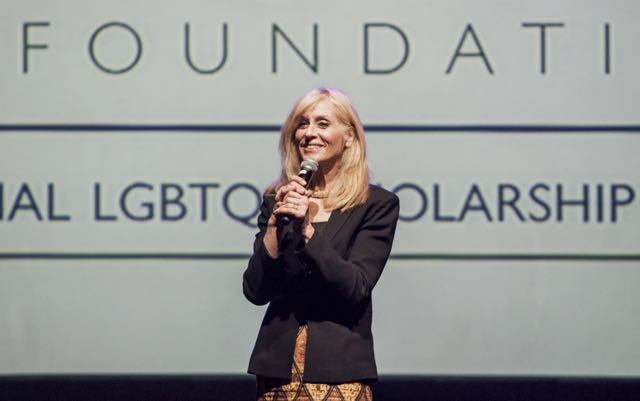
For gay political Baby Boomers, Mixner’s life is like the lead guitar in freedom song that runs from the 1970s through the 1990s. He divides his memory play into essentially three segments: the fight against the anti-gay Briggs Initiative in 1977; the fight against AIDS in the 80s; and the fight against his old Vietnam War protest buddy, Bill Clinton in the early 90s. Mixner emphasizes that “Oh Hell No” is based on his recollection of events, “back to a time when the world was a very different place than it is now,” Light said in her introduction.
And thus the play opens in semi-darkness, a bare stage with a projected letter from Mixner to his parents dated Sept. 10, 1976, in which he comes out. “I will not duck the struggle that is ahead of me,” he writes, even if that means rejection. And rejection he gets, with his mother writing back with a cringe-worthy story, culminating in “and now the vulture comes for you.”
But Mixner found the gay men of Orion in Los Angeles, which morphed into MECLA, the nations’ first gay political action committee, which voted on the “revolutionary” idea of making the group leadership co-sexual by electing lesbian attorney Diane Abbitt, helping bust the myth that women could not be good fundraisers and contributors.
And just in time. While Mixner may have been wrestling to create his own personal phoenix rising from the ashes, the gay world was savoring gay liberation through sex, drugs and disco. Until 1977 when Anita Bryant, Florida Orange Juice Queen and second runner up in the 1959 Miss America pageant, launched her “Save Our Children” campaign with Rev. Jerry Falwell’s Moral Majority and successfully repealed a non-discrimination ordinance protecting gays in Dade County.
When Bryant supporter, California State Sen. John Briggs, launched an initiative in California to not only fire all gay teachers but anyone who supported them, a controversy broke out in the gay community, says Mixner. David Goodstein, publisher of The Advocate, didn’t want to fight the initiative. “He didn’t want to give it credibility,” Mixner says. In fact, Goldstein threatened Mixner. “I know about your breakdown,” Goldstein said. “So does everybody else,” Mixner replied.
“I really believe we had to fight,” Mixner says. How could any gay person look themselves in the mirror and acknowledge they have any value if they didn’t fight for themselves?
Goldstein followed through on some of this threats, Mixner says, cutting off major donors. But others—including closeted gay actor Rock Hudson—stepped up, many giving $99 so they wouldn’t be exposed through campaign financing laws. But the anti-initiative campaign needed Big Bucks to fight successfully.
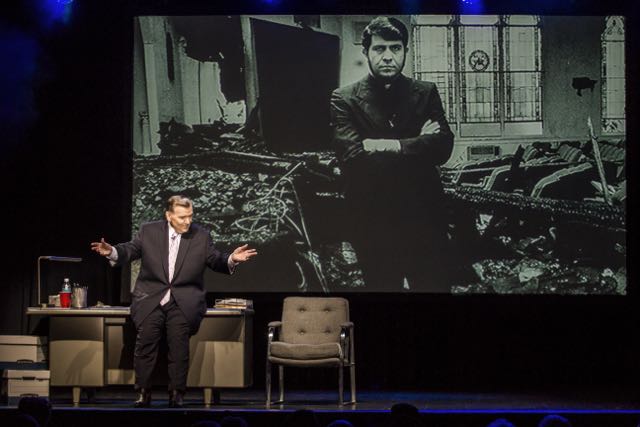
MCC Church founder Rev. Troy Perry, “one of my personal heroes,” says Mixner—said, “I’ll get you the money.” Perry fasted for 17 days in front of L.A. City Hall, after which he produced a check for $100,000. “This community should be forever in debt to that man,” Mixner says.
The No on Prop 6 campaign was formed with people like real estate broker Gail Wilson providing space and furniture and cleverly manipulating support from groups like the Beverly Hills Chamber of Commerce through the local media. Ironically, a featured story about the uphill battle in the Herald Examiner entitled, “Fear Stalks No on 6 Campaign” resulted in scores of checks from celebrities such as Norman Lear and Paul Newman with notes attached saying, “I’m not afraid” and “We’re with you.”
Los Angeles Times gossip columnist Marylouise Oates “put her job on the line,” Mixner said, by throwing a big entertainment industry party and telling everybody it was “a civil rights evening.” Mid-way through she told the “Who’s Who of L.A.” what the party was for and told them they had to pay to get out.
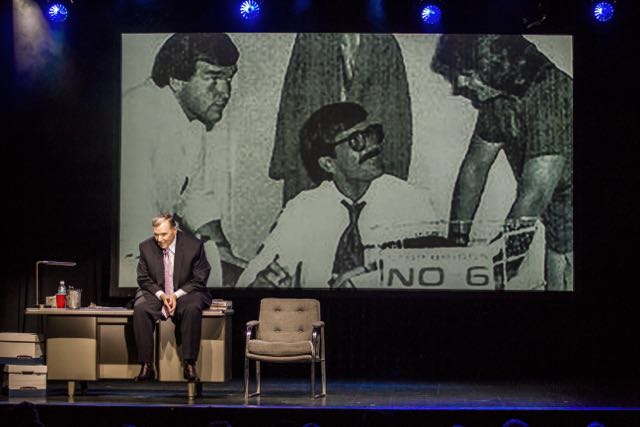
Mixner’s recounting of the gay No on Prop 6 meeting with Gov. Ronald Reagan evoked laughter as he described being so nervous, he just kept eating Reagan’s jelly beans until his partner Peter Scott (pictured above with Sally Fiske) slapped his hand away. They had been advised that Reagan would support the measure so Mixner needed to take another tact.
“I said, “I just never thought I’d see the day Ronald Reagan would support anarchy in the schools,” Mixner says, pointing out to a surprised governor that the way the initiative was written, any teacher who was about to discipline a child could be accused of being gay and forced to go on trial. “I said, ‘Governor, the kids are going to run the classroom. Discipline is going to fall through the cracks.’ He said, ‘What idiot wrote that?’ And I said, ‘Exactly.’”
The meeting lasted 45 minutes and the team left with no clue what Reagan was going to do. Two days later, an op-ed by Reagan appeared in which he said he opposed the Briggs Initiative because of anarchy in the schools. The No on Prop 8 team—which included Harvey Milk in the north and Ivy Bottini and Steve Smith in the South and with Sen. Ted Kennedy in opposition from Capitol Hill—defeated Prop 6. It was the last anti-gay initiative the anti-gay right-wingers would propose until the mid-1980s.
“Never do I remember such joy in a single night,” Mixner says. “It was one of the most joyful nights of my life. We were on the road to freedom, sexual liberation, a community coming together – we had it in our hands.
“And then came AIDS.”
After a moving musical interlude featuring Chris Bolan, Mixner readied himself. “This part’s hard,” Mixner says. “How do you talk about something you want to forget? It’s hard to believe that many of us made it through or that it even happened to us.”
Mixner blames the CDC for identifying the mystery illness at the outset as GRID—Gay-Related-Immune-Deficiency. It was a gay disease. “No one wanted to have anything to do with out overnight,” Mixner said. Insurances agencies “said we had caused this disease ourselves.”
But the LGBT community—lead by people such as Abbitt and Matt Redman—founded organizations and fought back—gays taking care of their own. People with AIDS (PWAs) were even sent to particular hospitals, like Sherman Oaks, while rabidly anti-gay Sen. Jesse Helms called for “every gay male to have a tattoo on his hand so the rest of society can avoid them.” Mixner says that he was not sober then and on nights when he’d get “looped” with friends, “we’d argue about what the tattoo should look like.”
But the gays kept fighting back, against the death and dying through local versions of the Dallas Buyers Club and politically—yelling at the DC police outside the 1986 AIDS Conference: “Your gloves don’t match your shoes.”
“That took their power away,” said Mixner.
But it didn’t stop friend after friend from dying. “I gave 90 eulogies for young men under the age of 40,” Mixner says, naming names and wiping away tears. Mixner was among a small group who helped dying friends who wished to end their lives.
And then there was Clinton, Bill Clinton. Mixner described how his former anti-war friend, his buddy from Arkansas with help from their mutual friend, prominent L.A. attorney Mickey Kantor, who had called Mixner about the endorsement, won the support of ANGLE (Access Now for Gay & Lesbian Equality), at a time when the gay community supported Sen. Paul Tsongas. In his interview with ANGLE, “he had more people with him than I think wound up voting for him,” says Mixner. Tsongas resented being called in and being asked questions, given his good LGBT record.
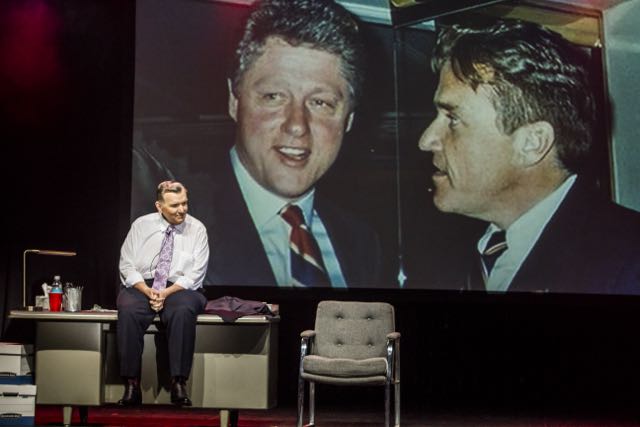
“Bill and Hillary (Clinton) with only Mickey Kantor came in, charmed the pants off of us, repeated what Mickey said he would on the issues. They stayed for three hours,” Mixner said. “Then Diane Abbitt spoke up. I’ll never forget this. In her most cynical vice—which is saying a lot—she said, ‘Governor, I’m sick and tired of people like you coming in here and promising one thing and then you walk out that door and we never even hear our name mentioned. Why should we believe you’re any different? If you’re not, I’m sick and tired of this. He said, ‘That’s a good point, Diane. I guess I have to prove myself.’ And she leaned back and said, ‘I guess you do.’”
The next day, ANGLE picked up the L.A. Times and on the front page was an interview in which Clinton said he was for gay people in the military, supported hate crimes, and was going to support the Employment Non-Discrimination Act. He also told The Times that if he was governor of California, he would have signed AB 101, the gay civil rights bill which Republican Gov. Pete Wilson had vetoed, sparking massive protests which Clinton witnessed.
Since Mixner thinks the Clinton section draws people to see his show, I won’t go into details. But ANGLE raised a “shitload” of early money for the dark horse candidate Bill Clinton—in 1988, the DNC turned down $1 million “pink dollars” raised for Michael Dukakis’ presidential race so this time would definitely be different. Mixner also discusses how the LGBT community was “loyal” in standing by Clinton during his darkest hours when the alleged affair with Paula Jones was exposed.
ANGLE had also demanded a speech before an LGBT crowd, an historic first for a presidential candidate, which Clinton delivered in 1992 at The Palace. It was in that speech that Clinton said: “I have a vision and you’re a part of it.” The speech gave momentum to the Clinton campaign, as did the Democratic Convention where Bob Hattoy spoke as an openly gay man with AIDS. But there were tense moments just before Clinton gave his acceptance speech, when no one knew whether he would use the words “gay and lesbian” or not. Behind the scenes, Mixner and several LGBT delegates threatened to walk out. Clinton used the words, positively—another first.
Mixner doesn’t mention this in his play but he was later honored on the eve of Clinton’s Inauguration—with a celebration opened by Peter, Paul and Mary—for helping elect the man who was expected to advance gay rights and start ending HIV/AIDS.
Mixner also explains the heart-stopping drama behind what is now largely regarded as Clinton’s betrayal on his promise to lift the ban on gays serving openly in the military and signing Don’t Ask, Don’t Tell and later, the so-called Defense of Marriage Act (DOMA).
Mixner says he had been approached to get the LGBT community to back the president and the DADT compromise—and he said, “Oh, Hell No! We will actively oppose it.”
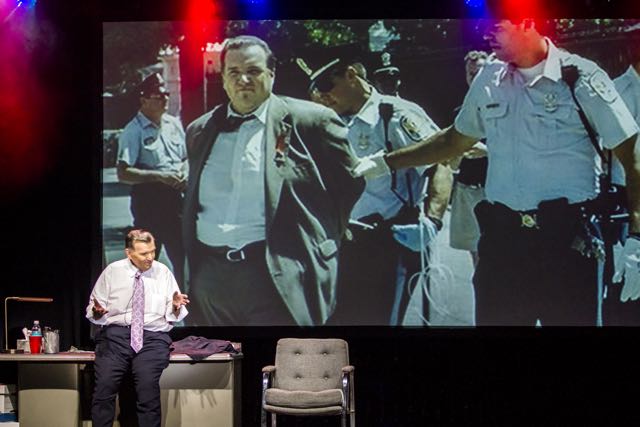
Mixner protested his former friend’s signing DADT by chaining himself, with other outraged ANGLE friends, to the White House gate, which got him arrested and banned from the White House.
And that action, that symbol of resistance, cost him political clients for four years—he was untouchable. But there was no victimhood, he says. He knew the rules. But 14,000 people had lost their careers because of the gay ban and 32 soldiers had killed themselves, while the White House “played with our soldiers lives for political expediency.”
In closing, Mixner revealed the secret behind the power of resistance that subsequently won over the White House and so many who didn’t believe in the equality and dignity of LGBT people. Mixner says he hopes through the play, interjected with humor and music, that he’s given a taste
“of our magnificent history. What an extraordinary people we are. What an incredible gift, having taken this epic journey for freedom we have to offer this troubled and fragile planet. Perhaps our great legacy will be the fact that even a cesspool of hate directed at us – we never stopped loving. We didn’t become like them. We worked like hell, we had each other’s back, and we showed unbelievable courage and dignity.
And that’s all because we never forgot one thing—-just one thing. It really is about love. Just love.
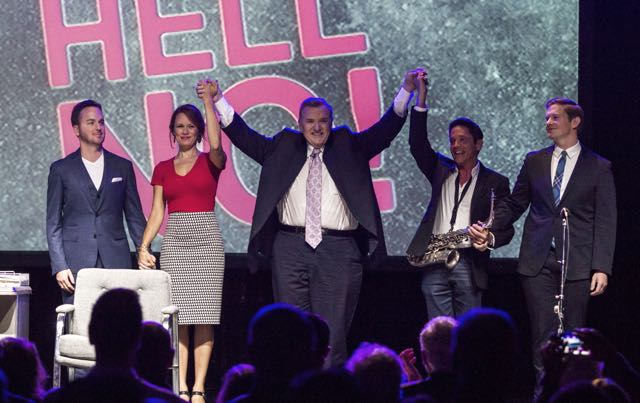
Mixner received a standing ovation, which he richly deserved with the help of performers Chris Bolan, Emily Swallow, Dave Koz, and Rory O’Malley.
After the play, Mixner met with several of the folks he mentioned and later went to a reception hosted by Alan Uphold and Jeff Olde.
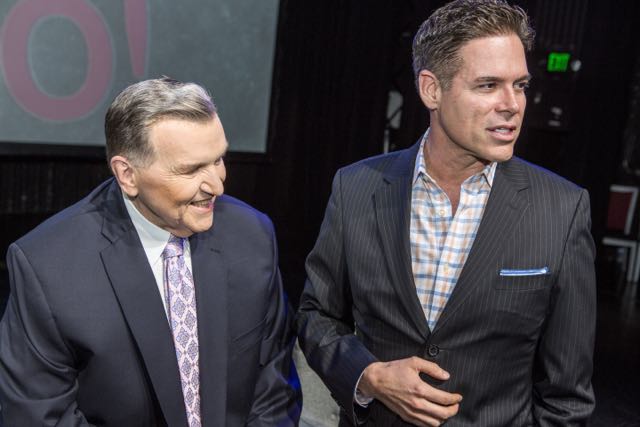
Mixner is congratulated by Jorge Valencia, ED of the Point Foundation.
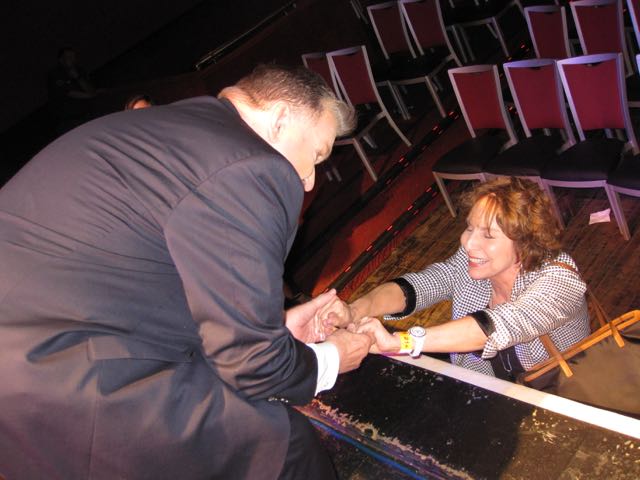
Mixner asks Diane Abbitt if he recognized her enough. She said he did, and she appreciated it.
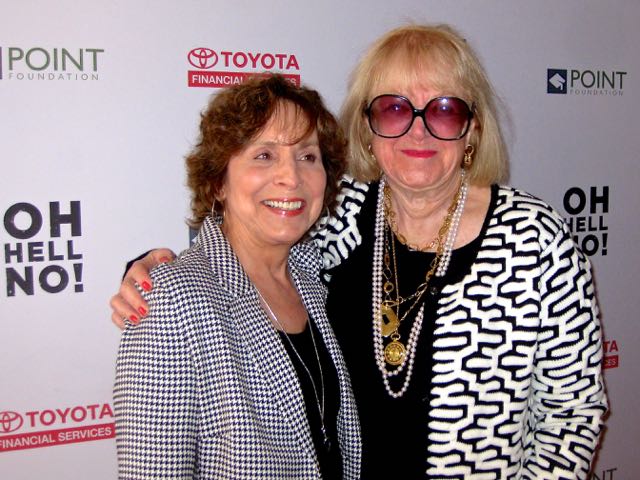
Diane Abbitt also said hello to old friend Marylouise Oates, who’s married to another Mixner friend, politico Bob Shrum.
And she said hello to former ANLGE member Jeremy Bernard, also mentioned a lot who recently resigned as the first gay male Social Secretary at the White House.
Also hanging out with Mixner were Judith Light, her actor/writer husband Robert Desiderio, and their managers, Jonathan Stoller and Herb Hamsher and their handsome assistant, Jonno Diersing.
The family also had a pre-show moment with L.A. County Supervisor Sheila Kuehl and best bud and senior advisor, Torie Osborn.
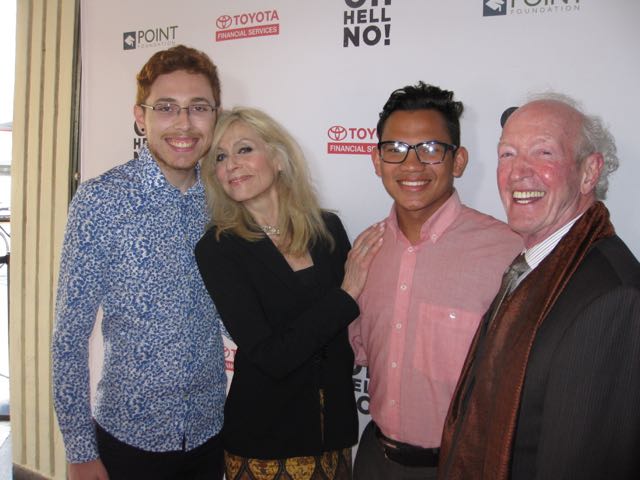
Light and Hamsher also gave Point Foundation honorees Isaias Guzman and Adrienne Adams some loving encouragement.
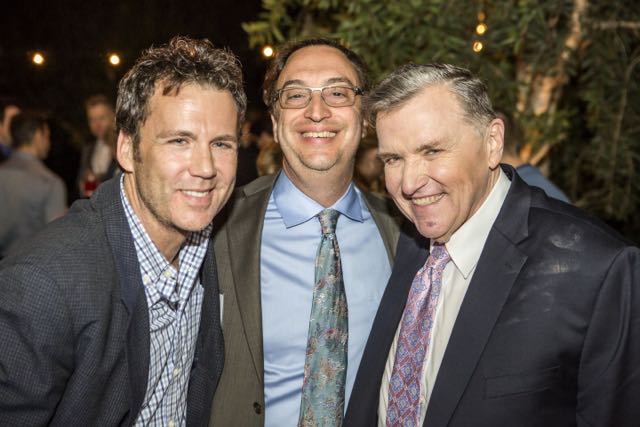
Mixner also mixed with Here Media CEO Paul Colichman and his husband, actor David Milbern.
And Mixner hugged longtime MECLA/ANGLE friend Roberta Bennett, a family attorney who worked with Mixner and Rabbi Denise Eger on raising a ton of money to ensure the acknowledgement of murdered LGBT people in the archives of the U.S. Holocaust Museum.
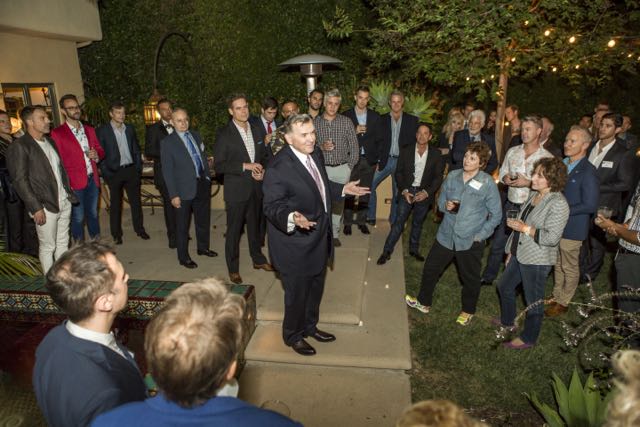
Mixner thanked his friends and supporters for being there for so many moments in his extraordinary life.
(Photos courtesy Point Foundation, with some additions from me.)
Speaking of love—here’s a fun interview with Judith Light, shot by my friends Renee Sotile and Mary Jo Godges of LGBT Hollywood, as she tells a story about David Mixner’s birthday celebration in Africa: