
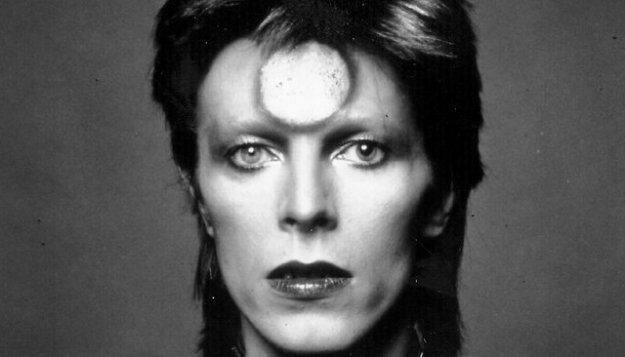
The loss of David Bowie on Jan. 10, 2016, after a courageous and little-known 18-month battle with cancer, stunned us all. The man was an inspiration and influence to many LGBTs—artists, designers, music aficionados and performers alike—who worshiped his turns in music, film and even the Broadway stage in a 40-plus-year career. We asked several local LGBTs to recall one of their greatest heroes. Check back, as we’ll be adding their remembrances as they come in.
“I never thought David Bowie would die. He sang to the broken freak sexy weirdo fabulous beast in all of us. Faster than we can miss him, he’s already somewhere cooler than any of us can imagine.” —Drew Droege, Contributing Editor of Frontiers
“David Bowie was not just a rock star to me, but someone who completely changed my life. Like millions of other awkward, weird adolescents, I can say his music and image had a seismic affect on me. We had a leper messiah telling us it was OK to be different, telling us to give him our hands, ’cause we were wonderful. Other artists, fads, styles, etc., came and went over the years, but Bowie stayed with me always. I’m not even making it up when I say I’ve often imagined what I would do when this moment came. A world without David Bowie in it? I’m strangely calm about it, because I realize how lucky I was to have had him at all. We all were. People like David Bowie don’t just come along once in a lifetime. They come along once in life. It’s a crash course for the ravers….” —Heklina
“When I was full of fear about 9 years ago to shave off my eyebrows and allow myself to truly begin to evolve into this shape-shifter illusionist spiritual harbourer of gendered confusion and adventure, it was David Bowie who I continuously looked to in those beautiful photos and otherworldly shows with that smooth glistening brow and darkly painted eyes when I needed that one whisper of faith in what the gut was telling me to do.
David Bowie let me know there was a place for people like myself—and now, in that place, I have found some of the most beautiful creatures I could ever imagine. Celebrating their uniqueness. Letting their gender be what it was born to be. Changing the rules and regulations that were forced upon us. Making the world a much more enchanting place to be in. Thank you, Mr. Bowie. There will always be a Gillette Mach 3 in the shower ready to shave the day’s brows off smooth and clean. XOXO” —Paul Soileau / Christeene
“Everyone I know is stunned and crushed, but the beautiful part of all of this is that he will live forever through his amazing music. So cry, but do it while listening to the unique and immortal gift David Bowie has left us all.” —Jackie Beat
“I was 15 years old and my step-mom handed me a cassette tape. It was Hunky Dory by David Bowie and to sound cliché, it changed my life. “Oh You Pretty Thing,” “Changes,” it was as if this amazing creature had formulated this bewitching music to guide this brooding young homo through his earliest moments of self-examination. It was exactly what I needed to hear at exactly the time I needed to hear it. To this day, when I hear his music I am immediately taken back to a time of pure self-analysis. No other musician has the power to transport me right into the head and heart of that young and impassioned kid.
“There was a boy / A very strange enchanted boy / They say he wandered very far, very far / Over land and sea / A little shy / And sad of eye / But very wise / Was he
And then one day / A magic day he passed my way / And while we spoke of many things, fools and kings / This he said to me / “The greatest thing / You’ll ever learn / Is just to love / And be loved / In return” —Mario Diaz
“Sadly and truly unfathomably, it IS true. David Bowie is no longer with us. And today, the world lost not only one of its greatest musicians, but a true artist, a trailblazer, a chameleon, a shapeshifter, a humanist and an iconoclast. Bowie is and was pretty much singular on this level for six decades. I doubt that kind of legacy will ever be matched; it surely will never be bested.
His influence on music and pop culture is immeasurable: the glam rockers, the punks, the new romantics, the alternative/indie rock bands, the goths, the hair metal bands. You would be hard-pressed to find any sane person with the opinion that ‘David Bowie sucks!’ and asking me to cite my favorite Bowie track is akin to asking me which favorite breath I took today. This man essentially soundtracked my entire life. From the time I first heard ‘Ziggy Stardust’ as a pre-teen in the suburbs of Boston to every dance floor he helped me fill over the past 35 years.
I will, however, cite that ‘Heroes’ might be the lyrical and emotional pinnacle for me. Just pure, unbridled, goosebump-inducing brilliance.
For LGBTQ people of my generation, this brave man basically told us all it’s OK to be weird and glamorous and fearless and as goddamn queer or different as we want to be! My generation didn’t grow up seeing examples of queerness all over TV (let alone MTV) or even in magazines. We didn’t have the internet, or makeup tutorials on YouTube, or RuPaul’s Drag Race in our living rooms. We, as closeted, loner gay kids in the ’70s, had to desperately search for any shred or breadcrumb of people or artists or music that spoke to us. Bowie not only spoke this to us, he shouted it.
My generation also got to devour every square inch of his incredible album artwork. People’s minds are still blown just looking at Diamond Dogs or Aladdin Sane today. And, I mean, do you have any idea how fucking radical it was for David Bowie to appear on Britain’s Top of the Pops in 1972 as Ziggy Stardust wearing makeup and nail polish? Parents literally protested and didn’t want their children to see this ‘gay freak’ on their TVs. That moment lives in infamy like The Beatles’ first appearance on The Ed Sullivan Show, in that hundreds of those UK kids went on make music themselves. I can guarantee you that moment is why we know who Boy George, Morrissey, Steve Strange, Duran Duran, Bauhaus, Marc Almond, Andy Bell and Neil Tennant are. And on and on and on.
Ten years later, and not to be outdone (by himself!), Bowie took it even further in the “Boys Keep Swinging” music video, appearing in drag as three different woman and telling the world, ‘When you’re a boy, other boys check you out.’ Even more radical was when he performed it with Joey Arias and Klaus Nomi wearing dresses on SNL. This was in 1981, kids.
Then, in 1983, he blasted MTV for not playing any black artists (which they were wholly guilty of until Michael Jackson’s “Thriller” forced their hands just a few months later). MTV was shocked to be called out, live on air, for their blatant racism. Bowie gave zero fucks.
To simply say that David Bowie allowed us all to be queer and different and free is like saying that water is wet. The fact that he wasn’t even actually gay himself makes him 1,000 times more badass in doing so. But you see, plenty of straight fans and musicians heeded the call, too. They were beat up and called faggots for dying their hair and wearing nail polish. Bowie allowed them to break out of the gender confines as well.
As we age, we lose all our icons. Even those we can’t ever imagine not being alive or omnipresent. So today I ask everyone to listen to all his music, and to remember him and keep loving the alien.
Rest in peace, Mr. Bowie. Hot tramp, we love you so!” —DJ Paul V. Vitagliano
“I always felt like an outcast, a very skinny and shy kid through school who was constantly bullied and picked on by my classmates. When you are growing up and dealing with that crap, you look for salvation and music heroes to look up to. One such hero was David Bowie, who completely changed the face of music and fashion. He told me that it was OK to be weird and different and to never let anyone else tell you how to live. I also struggled with my sexuality throughout much of my life, keeping it a secret until I was 38 years old. That secret caused a great deal of heartache and personal pain. When I came out, I decided that I was going to live my life as openly and honestly as I could. Experimenting with crossdressing and drag was a total accident as I was discovering my true identity, but I immediately found it to be one of the most liberating and creative things I could ever do. Dressing up was a true expression of who I was, inside and out. I didn’t have any specific drag influences; I wanted to create my own unique character, and thus my drag queen Uber-driving alter-ego Erika Simone was born in the summer of 2014. Just a few months ago I was having a conversation with a friend and telling them how much fun I was having experimenting with new looks and styles for Erika. I told him that I really wanted to be like the drag David Bowie who never settled and constantly reinvented himself. To say David Bowie completely changed my life would be a massive understatement. He was everything. RIP.” —Erika Simone
“My heart is heavy today. I wish I could’ve had the pleasure of meeting you and telling you about the impact you’ve had on my life. Thank you for making it cool to stand out and shine, rather than blending in with the crowd. Truly in a class of your own—kickass, punk rock, give-no-fucks, androgyne, beautiful, artistic, creative genius. I LOVE YOU!” —Sissy Spastik
“‘People stared at the makeup on his face / Laughed at his long black hair, his animal grace / The boy in the bright blue jeans / Jumped up on the stage / And lady stardust sang his songs / Of darkness and disgrace’
When you’re a young fagoon growing up on a tiny island in the middle of the Pacific, you tend to use your imagination to dream of an otherworldly life and long for something more than just the beautiful ocean that surrounds you. Thankfully my mother had a subscription to Vogue magazine that allowed me a myriad of fantastic galaxies created through stunning photographs fully art directed and styled that provided a cavalcade of never-ending possibilities.
My introduction to David Bowie was through the thick glossy, though I’m pretty sure at some point in my childhood I had heard a Bowie song in one form or another. It was really epic.
After some serious sleuthing at my local CD store (long before the Facebook, Instagram and Spotify, even before MySpace and Friendster, I went to Virgin or Tower Records, as I’m sure most of us did) I found Ziggy Stardust and Aladdin Sane back to back. I was so happy to have shoplifted them.
I listened to those albums and conjured up fantastic sketches and collages time and time again for my portfolio to present to the foundation course directors in art school. Moving to San Francisco and starting art school, this androgynous blonde-haired Ukranian escort from my illustration class who I was madly in love with took me to The Stud for my first Trannyshack. I had been dabbling in drag a few short months, with my shitty wig, boy’s shirt dress, and heels—a far cry from the glamourpuss fashionista I present today … IT WAS A DAVID BOWIE TRIBUTE NIGHT!
It was the most cathartic, mind-blowing experience I’ve ever seen. Up until then I thought drag was Celine Dion and Priscilla Queen of the Desert. These queens were doing songs in Bowie’s voice—A MAN… A FREAK…
I felt at home instantly. It was then that I had realized drag was transgressive, cathartic, spoken from emotion and someplace truly beautiful and more powerful than I can comprehend, and instantly I wanted to be part of this cultural movement. A year and a half later there I was onstage in my long black hair, cigarette dangling from my lips, writhing slowly under a blue-washed stage, pantomiming ‘Lady Stardust.’
I can go on at length at how ‘Lady Grinning Soul’ from Aladdin Sane makes me feel sexy, or how ‘Rock and Roll Suicide’ makes me an emotional ball, but though this is about my personal experience with Bowie, it is definitely something bigger than me. Bowie has the power to change so many lives. Bowie was the magic key to let a young effeminate gay boy realize his love of fashion. Bowie always taught me that to be cool, you really just have to live your life as authentically as possible and make no real apologies for it. A lot of the younger queens don’t understand that importance, to push boundaries and envelopes and step outside of their comfort zones. We are freaks. We are the tastemakers. And our place should never be to assimilate but to stand out and always be a rebel.” —Monistat
“It was tremendously disappointing when Bowie said that he wasn’t gay and it had all been an act. In my velvet rage, I felt betrayed. But watching the Golden Globes last night, I was struck by how we seem to give our highest honors to people pretending to be other people. And no one figured that out more effectively than Bowie. And the roles he played were to me—and my young gay imagination—infinitely more vital and more compelling than any number of award-winning roles. To be honest, it is a bit of mystery how David Jones, who wrote terrible (but fabulous) songs like ‘The Laughing Gnome,’ could suddenly come up with ‘Life on Mars,’ an anthem that seems to have it all—narcissistic nihilism, mass migration, dismaland, depression, police brutality, the culture of stupidity, wealth inequality, environmental collapse, clown car politics. And that’s just one hit out of hundreds. Rather, like Dave the astronaut in 2001, he came to know something. Regardless of how it happened—whether he was touched by an angel or probed by an alien—he had the gift of sound and vision. To me he was the man who told the world that it was OK to flounce around in thigh-high glittery platform boots, and for that alone I will be forever grateful.” —World of Wonder’s Fenton Bailey
“A legend is gone. A hero. If you listen to any music recorded in the last 30 or more years, you can indelibly hear David Bowie’s influence. But it goes so much deeper than that. David Bowie was an ambassador to queer culture for nearly five decades. A shape shifter, letting everyone in his sight know it’s not just OK to be different, it’s ideal. Everything he did was art, up until the very moment he died, celebrated with a Broadway show, his 25th album just released, and a surprisingly candid and haunting music video for his final single, ‘Lazarus.’ For anyone who managed to catch that video on Friday when it hit the internet, you might’ve gotten an inkling of what was to come. It was as though David Bowie whispered to his fans a secret early goodbye. The fact that he spent his last year on Earth creating art for us fans is just a testament to perseverance and showmanship. He will always be missed, but his art will continue his legacy indefinitely.” —Dominik Rothbard
“Trying to imagine a world without David Bowie’s influence is like trying to imagine a world without wheels, electricity or some basic fundamental cultural concept that everyone agrees upon, like breakfast or gratitude.
Trying to imagine an idea of myself without Bowie’s influence is frightening. Because it was through his example, his music and the influence of his first generation of fans that I discovered the tools, the dreams and the strategies I would need to develop into the being I am today. His fearless, and I mean fearless visual, sonic and personal assault on cultural norms has had repercussions so deep and so resounding on the culture, it truly is as if an alien being came to earth in 1967 and inserted foreign DNA into the human gene pool. And in the space of just two generations we have witnessed that DNA take over the species.
When I moved to NYC in 1996, equipped with ambitions fueled solely by the dreams I learned from the music I listened to and the films I watched, I found David Bowie everywhere. His music blared in the rock and roll nightclubs and sex dens of the East Village, the cafes of the west village, the fancy stores in SoHo and the slummy dorms at NYU alike. To live and thrive in the creative scene of that time was to live by the gospel of Bowie. It was a gospel of glamour, but not one of luxury. It was a gospel of rebellion, but a rebellion fueled by empathy and love. It was a revolutionary gospel that said, “The world does not tell you that you are beautiful, that you are important that your pain is valid, that you are a hero … YOU TELL THE WORLD THESE THINGS. Be the self you are, do the things that make you feel good, live and love the way you want to and you set the price of your own worth”
The fact that these sort of concepts are not terribly shocking or exciting to hear nowadays does nothing but show how succesful Bowie was in changing the world. I’m actually crying right now writing this, but it’s hard to feel 100% saddened by the loss without feeling guilty. The man left us so many riches. Now could anyone truly be sad when we still live in a world where his life’s work is accessible to us at the touch of a button? When we live on in the future he gave us. When we live on as beautiful shimmering characters in a story he wrote. xoxo. Love you, Father” —DJ James Cerne
“All deaths are sad. That’s the nature of finality. Yet some sting more than others. The loss of David Bowie to cancer is a mule kick in the balls. Not because he was young—he turned 69 on Friday, also the release date of his 25th record, blackstar—but because he was vital. I won’t belabor his importance or influence as a musician, which should be self-evident to anyone with ears; though I’d very much like to pay tribute to his chameleonic nature as an artist. His guises were not all equal. Some were downright ludicrous. However, for a pre-teen of indeterminate sexuality in the early-to-mid-’70s, with few role models of note and not yet versed in the veiled lingua of gay culture, there was power and recognition in both Bowie’s otherworldly androgyny and restless exchange of persona. He was sexy and scary and fearless, willing to explore whatever held his interest at the moment, be that Japanese kabuki or American soul, glam rock or fascism, cabaret or dystopia. You can be whatever you want to be, he showed us by example, including exactly who you are.” —Dan Loughry
“When I began my work as a drag performer, my style wasn’t to become a ‘fishy’ queen but rather find my inspiration in people like Jon Galliano, Tilda Swinton and the exquisite David Bowie, who blew away the gender lines with original styles that made creations I viewed as otherworldly. When I saw Bowie on my TV, I was transformed into a new place by his pioneering images that didn’t say ‘male’ or ‘female’ but made me feel like I could be an original. That was always my intention. I believe that when I create my alter-ego, Dita McEvil, I’m bringing her through a portal, a Stargate, if you will. She isn’t truly part of this world but joins it from time to time. I imagine that the Thin White Duke has gone through his own Stargate to rule in another land for a few hundred years. When we’re ready again, we’ll be graced with his presence, but thankfully we had him for the time we did. I feel fortunate to be so inspired by his music, art and style.” —Dita McEvil